Why You’re "Prepping" Too Much (And Playing Too Little)
Apr 27, 2026Hey everyone, Marc here.
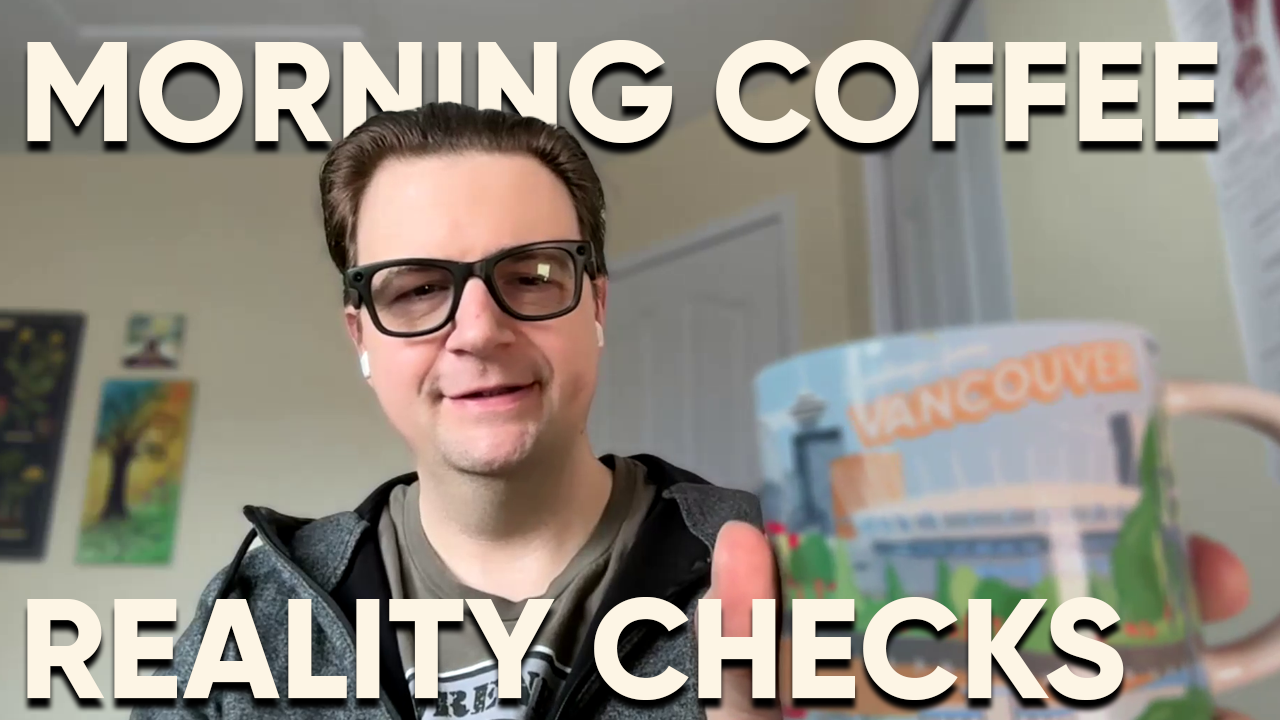
I’m sitting here with a fresh double espresso in my favorite Vancouver Tim Hortons mug, looking out the window as the sun starts to climb. I’ve been thinking a lot lately about the "jazz journey." We all look for that shortcut... that YouTube clickbait "secret" that promised to unlock the fretboard overnight.
But after years of playing and teaching, I’ve realized most players are taking the long way around by accident. They are preparing for a race they never actually start.
Let’s talk about how to stop "preparing" to play jazz and actually start making music.
The "Dictionary" Trap
Imagine you want to learn Spanish. You decide that before you ever try to speak to a human being, you’re going to memorize the entire dictionary. Or maybe you're learning chess, and you decide to memorize every single opening and endgame variation before you ever play your first match.
That’s what many guitarists do with scales and arpeggios.
It’s a form of "mental gymnastics." We think, "If I just learn all the melodic minor modes in all positions, then I’ll be ready." But the 80/20 rule applies here. If you just learn the songs, the theory you actually need will crop up organically.
Don't try to memorize the dictionary first. Just learn how to ask for the bathroom. In jazz, that means putting the song at the center of everything.
The "Bedroom Shredder" Pitfall
This is a phenomenon I see constantly. A player has great technique; they can shred like Van Halen, they know their gear, and they’ve practiced their fingerings for hours.
Then we sit down to play a simple standard like Summertime.
Eight bars in, they’re lost. They drop the beat. Why? Because their inner sense of timing isn't anchored in reality. You can have all the fancy Michael Brecker patterns in the world, but if you can’t keep the form, you aren't playing jazz.
There is no amount of solo practice that replaces the perspective of playing with other people. It’s like watching a movie on your phone versus seeing it in a theater—it’s the same "film," but the experience of the groove and the interaction changes your entire understanding of the plot.
What Does "Getting Better" Actually Look Like?
I was talking to a mentor of mine recently. He’s a heavyweight player, the kind of guy who can handle any session. I asked him what he works on with his high-level students. It wasn't "super-ultra-hyper-locrian" scales.
They worked on the fundamentals:
-
Transposition: Can you play All of Me in A major because the singer needs it there?
-
Structure: How do you start the song? Is there a clear intro? A tag ending?
-
Strategy: What’s your plan for the solo? Are you going to play for eight minutes, or take two focused choruses?
Getting "better" isn't usually about adding more "stuff." It’s about doing the simple things with mastery. Look at Pat Metheny playing standards. He’s using the same scales and triads we all use, but he’s doing it with incredible dynamics, phrasing, and nuance.
Your Mission: The Three Roles
To be a functional jazz guitarist, you really only have three jobs. If you do these well, you can play with anyone, anywhere:
-
The Melody: Don't just show up knowing the chords. Learn the head so you can lead the tune.
-
The Comping: Learn to play behind a soloist. This is 80% of your life as a musician. If you can’t make someone else sound good, you won't get the call.
-
The Improvisation: Use the changes to tell a story.
You don't need a Joe Pass virtuoso solo arrangement for every song. You just need a "minimum viable chord melody"—punch in the chords when you can, and if the tempo is too fast, just let the melody sing.
Stop over-prepping. Drink your espresso, pick up your guitar, and go play a song.
Marc-Andre Seguin
JazzGuitarLessons.net
LIKED THIS LESSON? HERE’S THE ROADMAP.
The Pinnacle Method shows you what to practice, and in what order, to start playing real standards. Free, and short on purpose.
Written by